

A company retreat doesn’t end when everyone flies home.
For People Ops managers, founders, and internal retreat organizers, the real closing chapter happens afterward, when attendee feedback is collected, reviewed, and shared.
Here’s how high-performing teams gather retreat feedback today, what they’re trying to achieve, and how you can make the process easier and more valuable.
What post-retreat feedback actually looks like
Most teams don’t reinvent the wheel. Instead, they rely on simple, familiar tools:
- Google Forms or Typeform are by far the most common
- Occasionally a Slack thread for quick sentiment checks
- In some cases, feedback is exported directly into Google Sheets / Excel to share with leadership or external partners
The format is usually consistent year over year, especially for companies that run retreats annually.
“We use every year the same Google form. Once results are gathered,we share them on Slack.”
Consistency matters. It allows teams to compare results over time and track whether changes actually improved the experience.
What questions do companies ask?
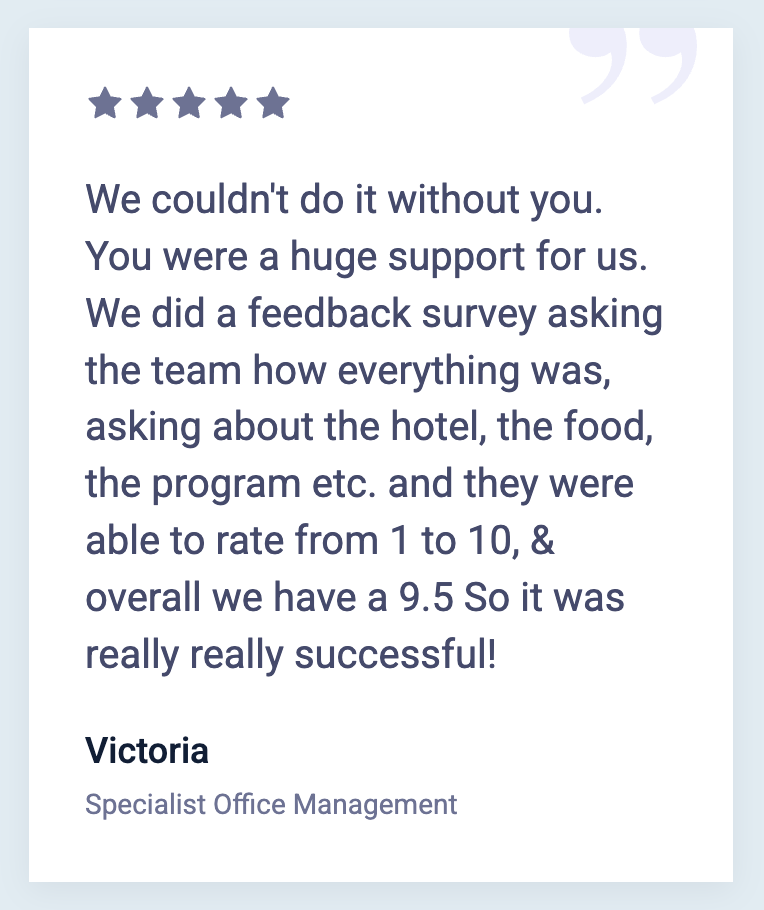
- Overall retreat experience (usually 1–10)
- Accommodation / hotel
- Food and beverage
- Workspaces
- Transfers and transportation
- Activities
- Schedule and agenda balance
- Dedicated working time vs. social time
The 1–10 scale is by far the most popular.
Some teams use 1–5 stars, but the intent is the same. Fast, intuitive scoring that makes trends easy to spot.
Why Teams Collect Feedback in the First Place
From our conversations with dozens of companies, feedback serves several clear purposes:
1. Proving the Retreat Was Worth It
Feedback often determines whether:
- Budget is approved for next year
- The retreat format stays the same
- Leadership sees tangible ROI
“These surveys also determine if there's budget allocated to a retreat the following year.”
2. Comparing Year Over Year
Even when retreats change location or size (often described as apples vs. bananas), sentiment trends still matter.
3. Validating or Challenging Onsite Complaints
Written feedback helps planners distinguish between:
- One-off comments made in the moment
- Real, recurring issues worth addressing
4. Creating a Culture of Transparency
Sharing results internally shows:
- Attendee voices are heard
- Feedback leads to action
- Retreats are not just nice perks, but intentional investments
Involving attendees in decisions
Some teams go a step further.
One standout example we’ve seen is asking attendees to help choose a charity donation as part of the feedback form.
This simple addition:
- Increases survey engagement
- Reinforces company values
- Makes attendees feel ownership beyond logistics
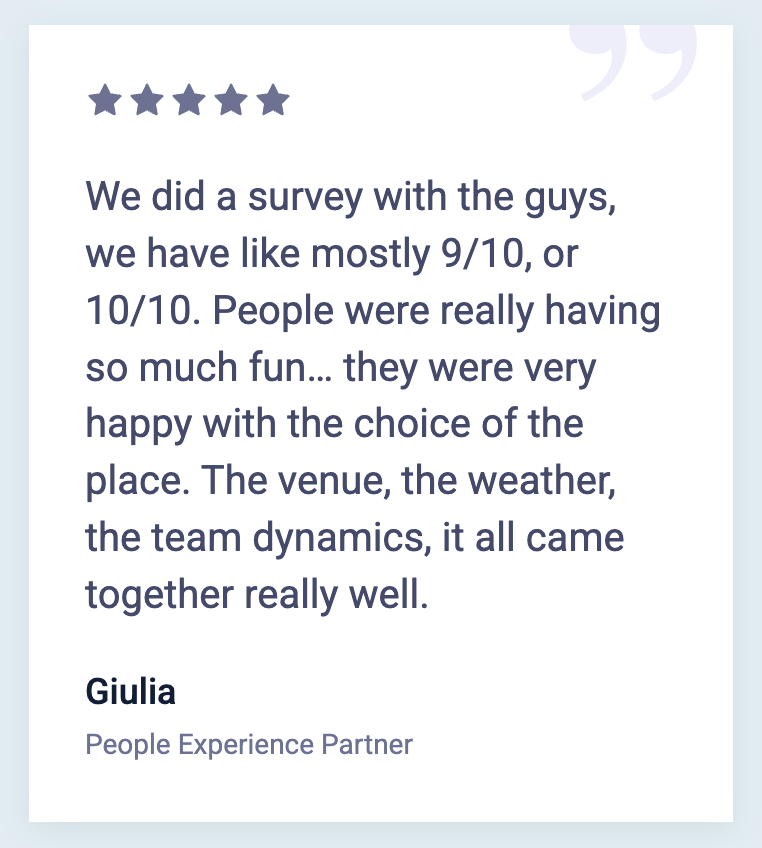
Whether the goal is securing next year’s budget, improving the agenda, or validating the success of the event, structured feedback turns a great retreat into a repeatable success.
And when feedback is easy to collect, it actually gets used.