At Surf Office, we organize company offsites and retreats for a living. Yet until this year, we had never organized a proper workation for our own team.
Only around 5% of our customers currently choose a workation instead of a more traditional company offsite. But after running two of them ourselves, I expect that percentage to move into double digits. For the right company, the format makes a lot of sense.
The lesson that surprised me most was simple: when you bring smart, independent people together, you do not need to fill every hour of their time. Give them a good place, enough time and very little structure, and they will figure out what is worth discussing.
How we used to bring our remote team together
Surf Office is a remote company, so meeting in person has always been important to us.
Every year, in early December, we organize an All Hands retreat where the whole company gets together. It is our main company-wide event of the year.
During the year, we also tried to organize smaller retreats for individual departments. In theory, this made sense. In practice, it was never as simple.
We are not a huge company, and many of our functional teams are small. To make a retreat worthwhile, we often had to combine several teams. Some teams organized one; others skipped it. The format was inconsistent and difficult to manage.
We also realized that the usual purpose of these retreats—brainstorming strategy, solving problems and generating new product ideas—did not always require another structured event. In many cases, we were more effective doing that work asynchronously.
Then Lola, one of our colleagues, proposed a different idea.
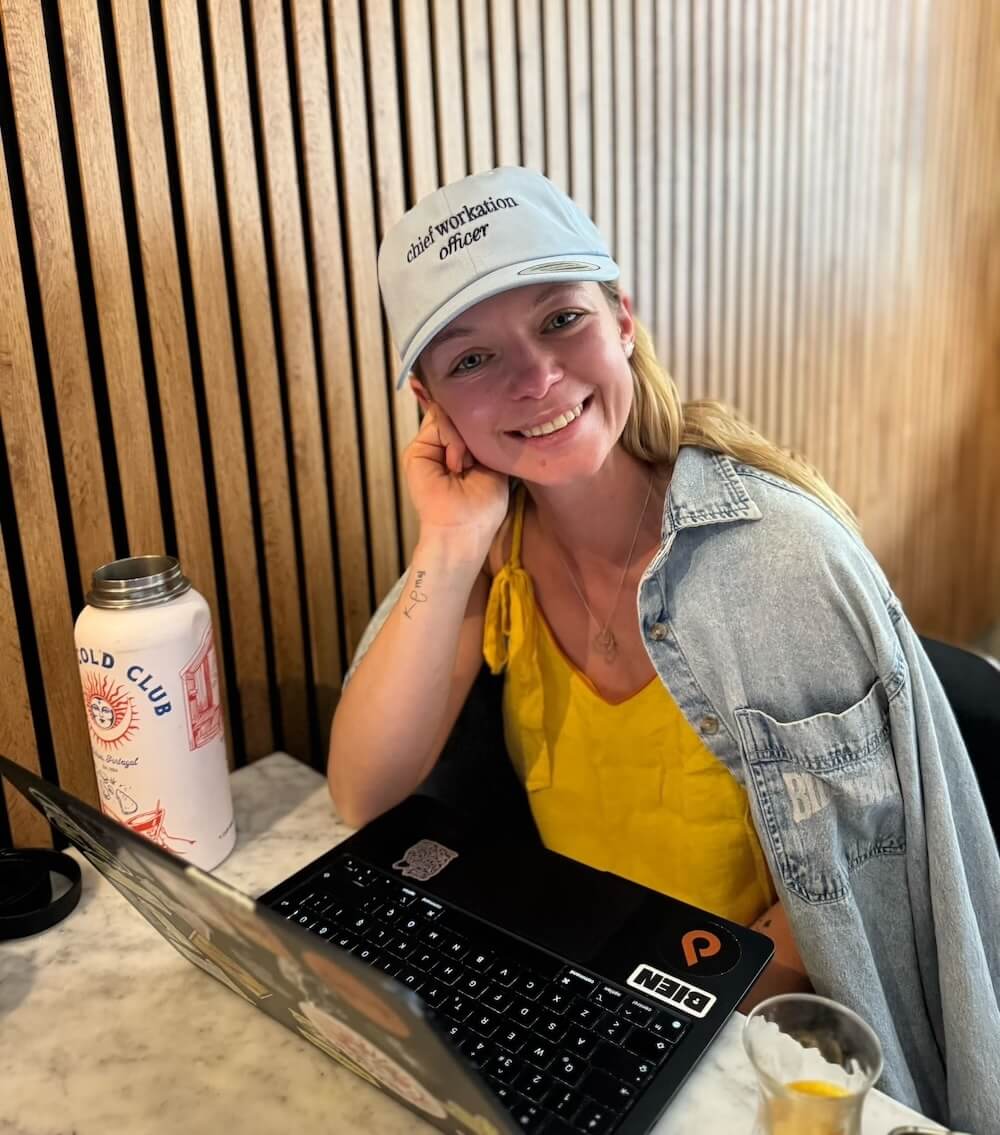
We now jokingly call her our Chief Workation Officer.
Her suggestion was straightforward: announce an interesting location, invite anyone in the company to join and spend a week working together. Participation would be completely optional. Surf Office could sponsor a few dinners or part of the accommodation, while participants covered the rest themselves.
It would not replace our annual All Hands. It would be an additional opportunity for people who wanted more time together during the year.
The idea was easy to support. Someone was taking ownership, it would cost the company relatively little and the potential benefit to the team was obvious.
While planning the first one, I changed one part of the model: Surf Office would cover the whole trip, including travel and accommodation, just as we do for our regular retreats. Joining would remain optional, but nobody’s decision should depend on whether they could afford to come.
Experiment one: eight people in rural Serbia
Our first workation took place in the Serbian countryside in March 2026.
Rural Serbia at the end of March was probably not the most obvious way to create FOMO. Eight people joined, including me.
The original plan was to have almost no plan. We would spend a week in the same place, continue our normal day-to-day work and let everything else happen naturally.
I could not completely resist adding some structure, so we dedicated one day to an AI hackathon.
At the time, many people were reading about AI, testing tools and thinking about how it might affect their work. But there is a big difference between experimenting with a new tool and using it to automate a complicated process inside a real company. The latter requires context from several people, and that kind of work is often easier in person.
Two weeks before the workation, I shared a Google Sheet and invited everyone to add possible projects. We collected 46 ideas.
On the morning of the hackathon, we reviewed them together and selected eight. We formed teams of two, spent the day brainstorming and building, and demonstrated the results before dinner.
There were no prizes and very little competition. The purpose was to learn. The demos focused as much on the building process as on the final result, which created a lot of small “aha” moments.
The size of the group helped. With only eight people, we could make decisions quickly, move between conversations and understand what everyone else was building.
More importantly, the effects continued after we returned home. More colleagues started building AI agents and workflows instead of only reading about AI, overanalyzing it or feeling that they were falling behind. The hackathon became a reference point for conversations across the company.
The rest of the week was deliberately uneventful. We worked, ate excellent Serbian food, went on one hike and made a bonfire every evening. The location had very few distractions, which turned out to be part of its appeal.
It felt different from a retreat. Slower, less managed and more natural.
From experiment to a new company format
After Serbia, I started questioning whether we needed functional team retreats at all.
The first workation had brought together people from different parts of the company. Because there was no single department or strategic topic at the center of the week, the conversations crossed the usual boundaries. People learned about projects they would not normally encounter and helped solve problems outside their formal roles.
So we decided to experiment further: keep the annual All Hands, stop organizing separate team retreats and use optional workations during the year instead.
Our second workation took place in the Portuguese countryside in the first week of July. This time, 19 people joined.
I suspect some colleagues had watched the Serbia experiment from a safe distance and decided they did not want to miss the next one.
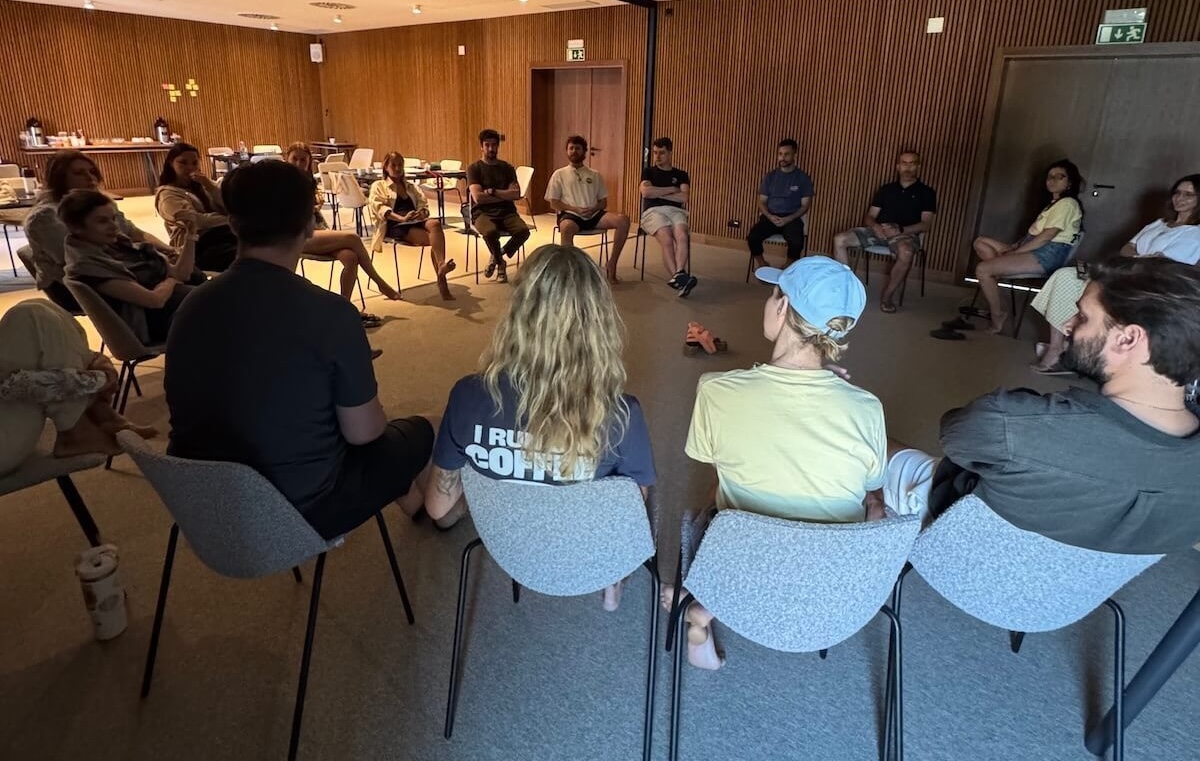
We chose a wellness venue where people could comfortably spend the entire week. As in Serbia, everyone continued with their regular work. We ate together, talked, exercised, relaxed and had many informal one-to-one conversations across the team.
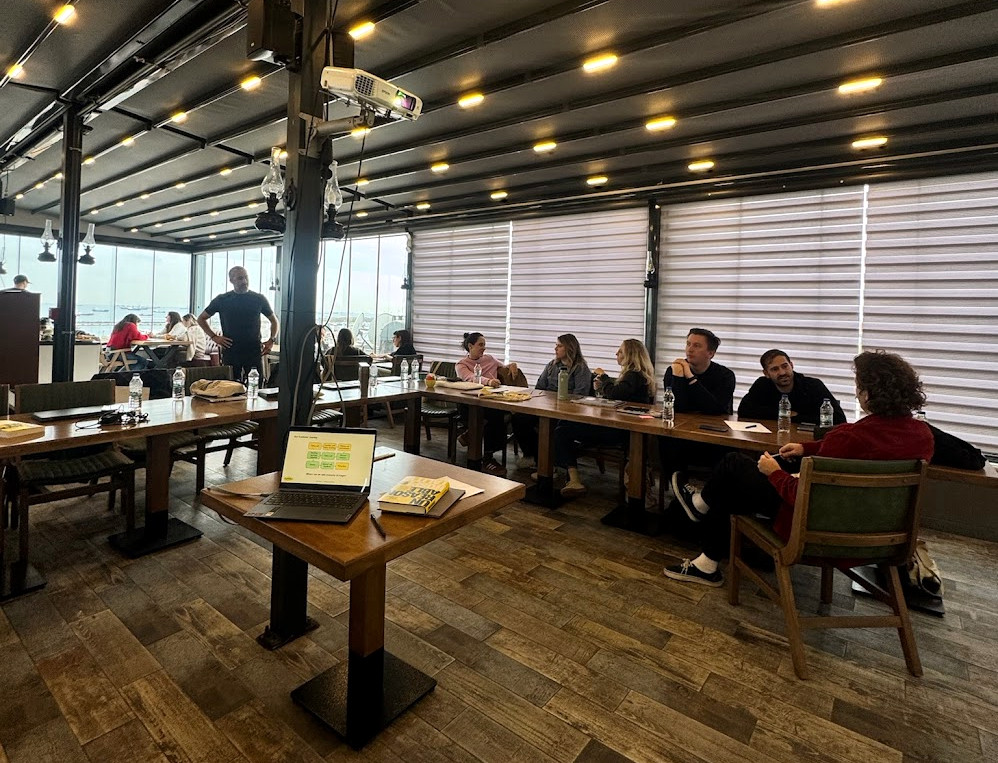
We also added one organized day, but this time we used a Barcamp rather than a hackathon.
Why a Barcamp worked well
A Barcamp is a self-organized mini-conference. Instead of management deciding the agenda and selecting speakers, anyone can propose a talk, workshop or discussion. And every participant can become a facilitator.
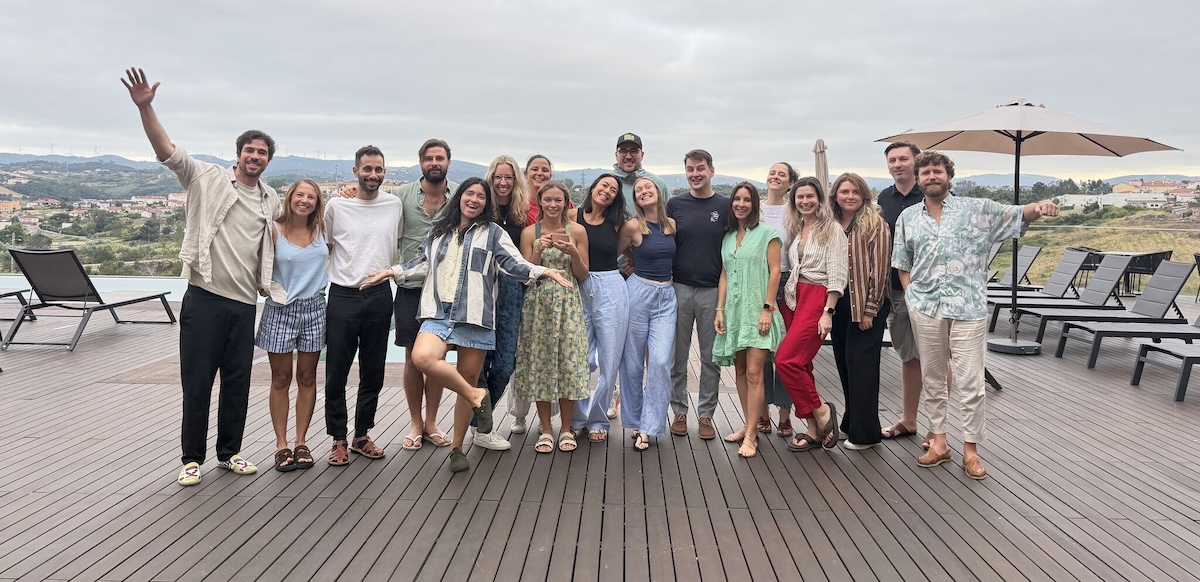
Two weeks before the Portugal workation, I posted in Slack and asked people to suggest sessions. We created a page where everyone could upvote the ideas they found most useful.
Nineteen participants proposed 22 sessions. On the morning of the Barcamp, we discussed the most popular ideas and selected eight for the day.
The highest-rated session was “How to disconnect while on vacation.” Others were more directly related to the business, including a session about improving the way we contract audiovisual suppliers for large company offsites.
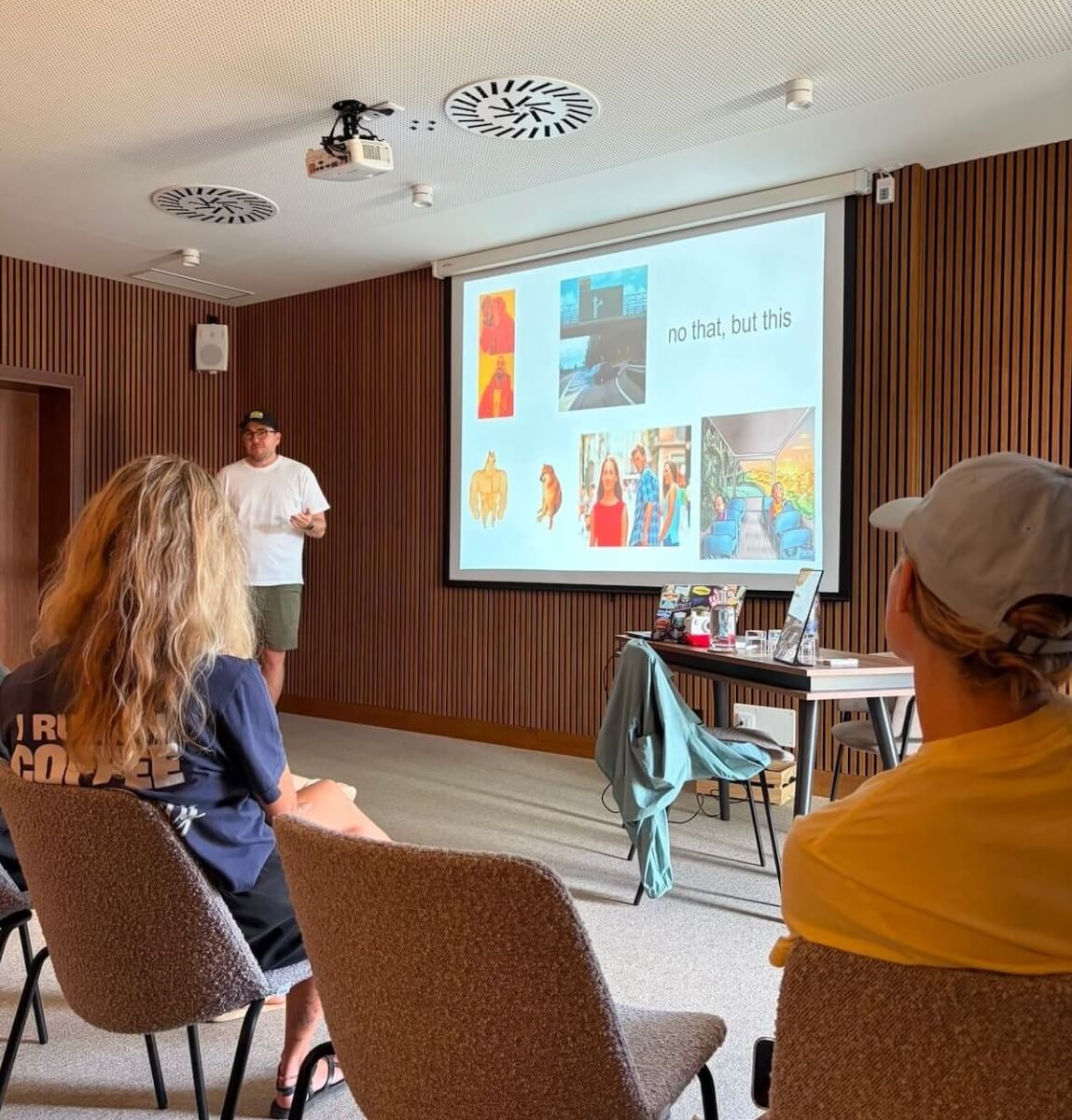
My own contribution was a workshop on creating memes 😀
The day helped me understand the difference between the two formats:
- A Barcamp is useful for sharing knowledge, exploring broad questions and discovering which ideas have energy behind them.
- A hackathon is better for building and testing something once you have a clearer idea of what you want to create.
The two could easily be combined during the same week: use a Barcamp to surface and sharpen ideas, then a hackathon to prototype the best ones.
But neither should take over the workation. One structured day was enough.
The founder’s urge to over-organize
When a remote company brings people together, the trip is visible and expensive. Flights, accommodation and food add up quickly. As a founder, it is tempting to make every minute look productive.
You put everyone in a meeting room. You add strategy workshops, motivational presentations, brainstorming sessions and team-building activities. Soon, the agenda is full from breakfast until dinner.
It feels responsible because the company is “making the most” of the investment.
But a packed schedule can remove the thing people need most: time.
During a workation, people still do their normal jobs. Around that work, they naturally ask each other questions, compare projects, test half-formed ideas and start conversations that would never justify a formal meeting on Zoom.
One discussion over breakfast leads to another while walking outside. Someone from sales explains a recurring client problem to someone from operations. A colleague joins a project because they happen to have relevant experience. Two people who normally exchange Slack messages finally get enough context to solve something properly.
Over five or six days, this creates hundreds of small exchanges that no structured workshop could reproduce.
If you have hired smart, self-directed people, trust them to decide what is worth talking about.
Your job is not to facilitate every interaction. Your job is to provide the right place and enough time.
A workation is not just a longer company retreat
The two formats serve different purposes.
Our annual All Hands still has a place. It brings the whole company together and creates a shared moment for everyone.
The workation does something else. It gives a smaller, self-selected group enough space to work and spend time together without trying to manufacture a specific outcome.
Which teams are ready for a workation?
I do not think the format is right for every company.
It is most likely to work when:
- Most people already know the company and one another.
- The company has a solid culture that does not require a facilitated boost.
- The business has product-market fit and is not gathering to resolve an existential question.
- Team members are independent and self-directed.
- People can continue their normal work without needing a highly controlled setup.
A workation is less suitable when many participants are new, the team needs urgent alignment or leaders expect the week to produce a list of predefined decisions. In those cases, a more structured offsite may be the better format.
The mistake would be to organize a workation, leave the agenda empty and then judge it by the output of a strategy retreat. Its value is more distributed. You see it in stronger relationships, faster informal communication, new collaborations and ideas that continue developing after the trip.
The venue matters more than the destination
For a conventional offsite, companies often begin with the city. For a workation, I would start with the property.
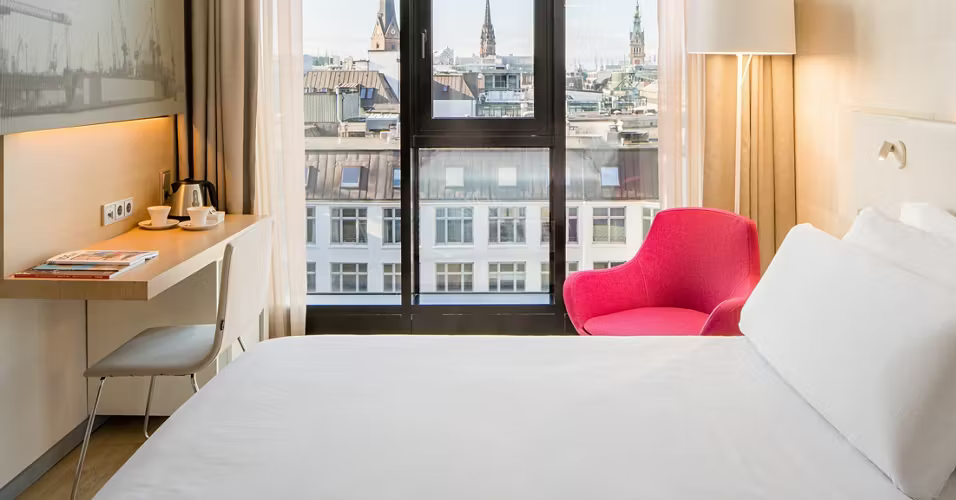
People will spend much more time at the venue than they would during a short retreat, so it needs to function as a comfortable place to live and work for nearly a week.
At a minimum, I would look for:
- Fast and reliable internet.
- Several comfortable workspaces, including quiet areas for calls.
- Excellent food on site or very close by.
- Bedrooms and common spaces where people can genuinely relax.
- Outdoor space, wellness facilities or access to nature.
- Enough variety that nobody feels trapped in a windowless meeting room.
- Few logistical distractions once the group arrives.
An isolated countryside property can work better than a famous city. In Serbia, being in the middle of nowhere helped us focus and spend time together. In Portugal, the wellness setting made a longer and slower week feel natural.
The goal is not to find the destination with the longest list of attractions. It is to find a place where people are happy to stay.
What we will do next
We are still experimenting. Two workations are not enough to create a universal formula, and the format will probably evolve as more people join.
But I am convinced by the basic model:
- Keep participation optional.
- Give the group five or six days instead of compressing everything into a weekend.
- Let people continue their normal work.
- Choose the venue very carefully.
- Add no more than one or two purposeful formats, such as a Barcamp or hackathon.
- Protect the empty space.
That last point may be the hardest.
The instinct to fill the calendar comes from a reasonable place: gathering a remote team costs money, and leaders want the investment to produce something tangible. But not every valuable outcome can be scheduled in advance.
Sometimes the best way to help people work together is simply to let them work together.
And if you are thinking about organizing a workation, Surf Office can help. We have already identified venues that combine reliable workspaces, strong internet, excellent food and the kind of environment where a team can comfortably spend a full week—without feeling locked inside a boring meeting room.