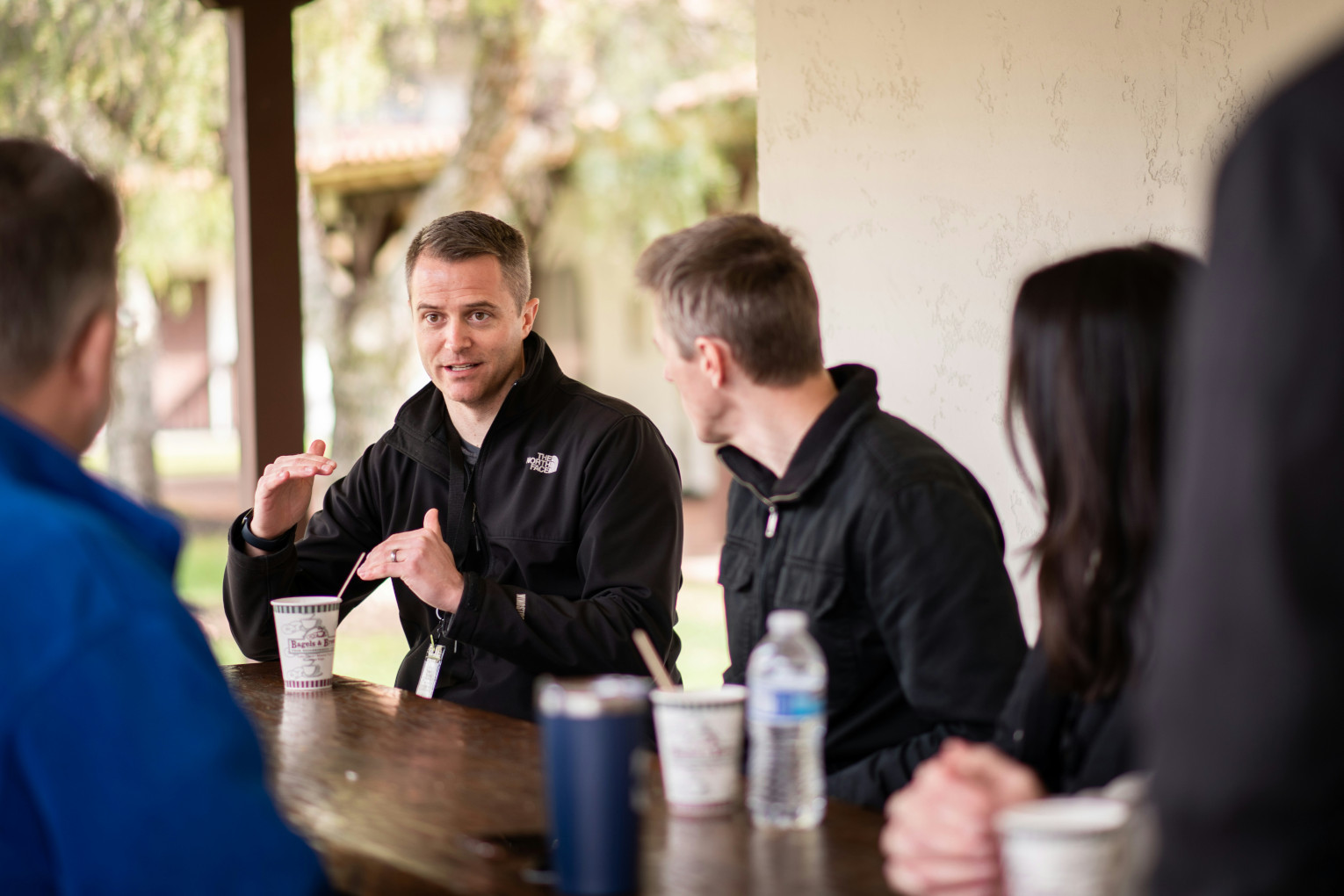


Every team gets tested eventually. The teams that handle difficult moments best have a core strength in common: resilience.
So how do you build resilience before the next workplace wobble happens?
That’s what we’re outlining today: breaking down what resilience means at work, and a plan for developing resilience in your teams.
So let’s get to it!
What is team resilience in the workplace?
Team resilience is a group’s ability to keep functioning when work gets difficult, then recover once the tough time passes. Challenges can take many forms, depending on how your company operates, but resilience is the ability to get back up and keep pushing forward.
A resilient team can, of course, still have bad days, but the critical factor is how well they pull together after things start sliding sideways.
Research into organizational resilience develops at the group level, not simply coming from individual personalities. The data shows why this matters so much:
- Stronger team performance: One workplace study found that stronger team resilience was linked with better team performance across 52 small and medium-sized businesses.
- 84.6% lower turnover intention: A 2025 study of over 200 nursing teams found that teams in the “highest resilience” category had 84.6% lower odds of turnover intention than teams with low resilience.
So yes, resilience can (and should) be developed across a workforce. A few thoughtful changes to how your team handles pressure will make future difficulties far more manageable.
XY steps to build resilience in your teams
Below, we’ve outlined 10 steps to develop resilience in your teams and across the workforce:
1. Make your setbacks safe to talk about
Starting off, you need to make it so that mistakes at work become learning processes. Your team must be able to say “That didn’t go well,” without the office suddenly feeling like a courtroom.
Setbacks are a part of working life. Sometimes a project can miss the mark, or a decision sends people down the wrong path, for a while. What really matters is that people are okay talking about it afterwards.
Let your teams know you’re making a space where you can be honest and open about what happened. People should be able to raise problems early and talk openly about what they learned, without worrying that every mistake will follow them around for months.
Strengthen this habit through regular reflections or resilience-building activities that unpack any problems together, without any awkwardness.
Intentionally making setbacks easier to discuss lets teams get better at facing the next one with confidence. And we all know, sometimes that’s what’s needed.
2. Choose clarity when the pressure kicks in
When the pressure kicks in, uncertainty can knock a team off course faster than you can notice. People start guessing what matters most, and work begins heading in the wrong direction.
Make the main focus obvious and give each person a clear sense of ownership. If plans change, communicate the new direction quickly. Nobody wants to spend half a day finishing something that stopped being important before lunch.
Short check-ins can help everyone reset around the same goal when work starts piling up. You can also consider ways to amplify team productivity when workloads start getting tangled.
Clarity gives people something solid to work from during demanding periods. When everyone knows what deserves their attention, your team can keep moving without any guesswork.
3. Strengthen relationships before the tough times
Strong working relationships are much easier to rely on when they already exist before something goes wrong.
Believe us, you do not want the first proper conversation between two colleagues to happen in the middle of a crisis. Give people regular chances to get to know each other while things are running smoothly. Familiarity makes it easier to ask for help and speak openly when something tough comes up.
This is especially important for remote teams, where relationships can sometimes get stuck inside scheduled calls. Using regular connection-building activities will give people more natural opportunities to spend time together, even in remote settings.
You can think of these relationships as something you build in advance. When tougher moments eventually show up, your team already knows who they can lean on.
4. Flip mistakes into something useful
Talking about a mistake is useful. Letting the lesson disappear into the meeting notes afterwards is considerably less useful.
Once a project takes a wrong turn, give your team a chance to work out what actually caused it and what needs changing next time. Maybe the process was clunky. Maybe the original plan simply asked too much. Either way, pull out one practical lesson and carry it into the next attempt.
This becomes a very powerful tool as a growth mindset activity, helping people become more comfortable learning from things that went wrong.
Otherwise, the same mistake has a nasty habit of showing up again wearing a fake moustache.
Use the lesson properly, and your team becomes better equipped for whatever lands on its desk next.
5. Stop your communication from getting messy
Next, you need to remember that communication gets messy fast when a team is under strain. An old update hangs around too long, and somebody ends up working from the wrong version of events.
Give important information one obvious home. When something changes, update it there and make sure the people affected actually see it. That saves your team from the familiar “Hang on, when did that happen?” just before the meltdown.
Stronger team collaboration is easier to achieve when people know where to speak up, and where to find the latest information.
Keep the route for questions simple too. A quick answer can stop a small misunderstanding from turning into an afternoon of detective work.
Resilient teams recover faster when communication stays clear. They spend less time untangling crossed wires and more time dealing with the problem in front of them.
6. Give the team room to recover
Even the most resilient teams need time to come back down after a demanding stretch of work.
So for the next step, think about how your team winds down after busy periods. Do they have enough breathing room? Are you easing the load for them for the next few days? Do they even have an outlet if they do feel a little burned out or stressed?
Much like a good workout, recovery time is incredibly important. They can’t keep running on empty, so make sure there are perks in place to keep them in the best shape.
As their manager, you’ve got to pay attention to the energy level of each member of the team, and support them when it’s running low.
They’ll return sharper once they’ve had a chance to genuinely reset.
So make recovery a natural part of how the team operates, so they have room to recharge and return to their best. Great stuff!
7. Look back before racing ahead
To make your plan for team resilience truly special, you should designate some time to look back. This is because, once a difficult period is over, the temptation is usually to close the tab and never speak of it again.
Try setting up some short retrospectives to help everyone work out what went well and what should change before the next challenge arrives. Keep it focused enough that it feels useful, and that it doesn’t turn into a two-hour investigation with too many slides.
Ask people where the greatest difficulties appeared. Then turn what you learn into something the team can carry forward. Even one useful adjustment can make the next project run a lot smoother.
A retrospective like this can also stop valuable lessons from disappearing as soon as everyone gets busy again.
A resilient team learns from what it has already been through. Take that knowledge with you before everybody goes racing towards the next deadline.
8. Keep momentum when you feel things slowing
Momentum can, and often does, fade away during a long stretch of work. Deadlines get heavier, and people stop bringing the same energy they had at the beginning. It’s a natural part of the work process.
However, this is something you can actively combat and remedy. The goal is to make progress feel visible again. Break the next stage into something people can actually see themselves finishing, then acknowledge movement as it happens. A clear milestone will do more for morale than another speech about “pushing through.”
This fits perfectly into a well-timed motivational team meeting, helping everyone reconnect with the reason the work matters and leave with a clearer sense of what comes next.
Keep the tone realistic. Teams can usually tell when encouragement is forced, and nobody needs a five-minute monologue about “giving 110%.” They likely already did.
Resilience shows up in the ability to keep moving when enthusiasm dips. Help people see that progress is still happening, and momentum has a much better chance of returning.
9. Stop productivity from becoming a pressure cooker
For the next step in your plan, make sure you haven’t become too reliant on using productivity as a measuring stick. It’s a big problem when every week feels like a race to squeeze in more work, and teams become the opposite of resilient.
In your plan, pay extra attention to how much work people are carrying, and whether the expectations on them really make sense. Sure, a packed-out calendar looks productive from afar, but when it’s overdone, it starts looking like a tall game of Jenga.
A truly resilient team needs enough room to get their great work done, without feeling permanently over-rushed. As a manager, you should be questioning workloads when you notice the pace is becoming unsustainable. Sometimes, one deadline needs moving so that the work already underway gets the attention it deserves.
Keep an eye on the habits your workplace rewards, too. It’s no good to only lavish someone with praise because they worked outside of normal hours, is it? It sends the wrong message.
Team resilience is hard to maintain when exhaustion is treated as proof of effort. You’ve got to make productivity sustainable, as an example for the rest of the team to follow.
10. Step away from the everyday together, as one
As a final step for your resilience plan, it’s good to remember that teams benefit from getting out of their usual surroundings. Otherwise, the same old problems get looked at in the same tired way.
Spending time together somewhere new can give people a different perspective on how the team works. Conversations are a lot easier away from desks, especially when nobody is half-watching their inbox during them.
A well-planned team-building event offsite can give teams a shared experience that strengthens how they respond to difficult periods together.
It also gives people the chance to see each other outside their usual roles. You might discover that the person who barely speaks during Monday meetings becomes super competitive the moment a paddleboard appears.
Those moments work wonders. Team resilience grows stronger when people have experienced challenges together, and know they can rely on the group when they get back to the tasks as a group.
Build resilience on a Surf Office team-building retreat!
Building resilience is no easy task in the workplace, but one surefire way to start building is with a Surf Office company retreat.
A team-building retreat with us gives your people the chance to spend proper time together, somewhere new and exciting. Put some of these resilience-building ideas into practice while giving the whole team an experience they’ll never forget.
Here’s what we offer:
- Stress-free transfers? We got you! ✅
- Quality-assured accommodations? Check! ✅
- Engaging team-building activities?specialty ✅
- Restaurant reservations? That's on us! ✅
- Expert retreat planning assistance? Of course, we have this covered! ✅
- On-site support, tailored to your needs? Absolutely ✅
Not only this, but we also have access to 200+ locations around Europe, APAC, the US, Latin America, and now Africa, meaning the sky is the limit when it comes to choosing the right location for you and your team.
Start building resilience in your workforce with a Surf Office retreat. Spaces fill up fast, so contact us before they’re all booked out!